
Do the lights in your car dim when the music plays a loud bass note? That is a sign your amplifier is drawing more current than your vehicle's electrical system can instantly supply. A capacitor can help — but it is not always the right solution, and it is not a substitute for a properly sized electrical system.
Why Lights Dim When Bass Hits
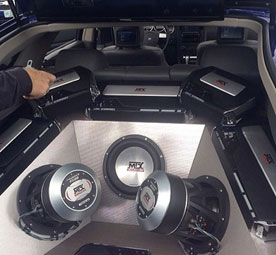
Large car audio amplifiers draw large amounts of current from your vehicle's electrical system. Multiple-amp systems draw even more. When a heavy bass note hits, the amplifier demands a sudden surge of current. If the electrical system cannot supply it fast enough, voltage drops — and the lights dim.
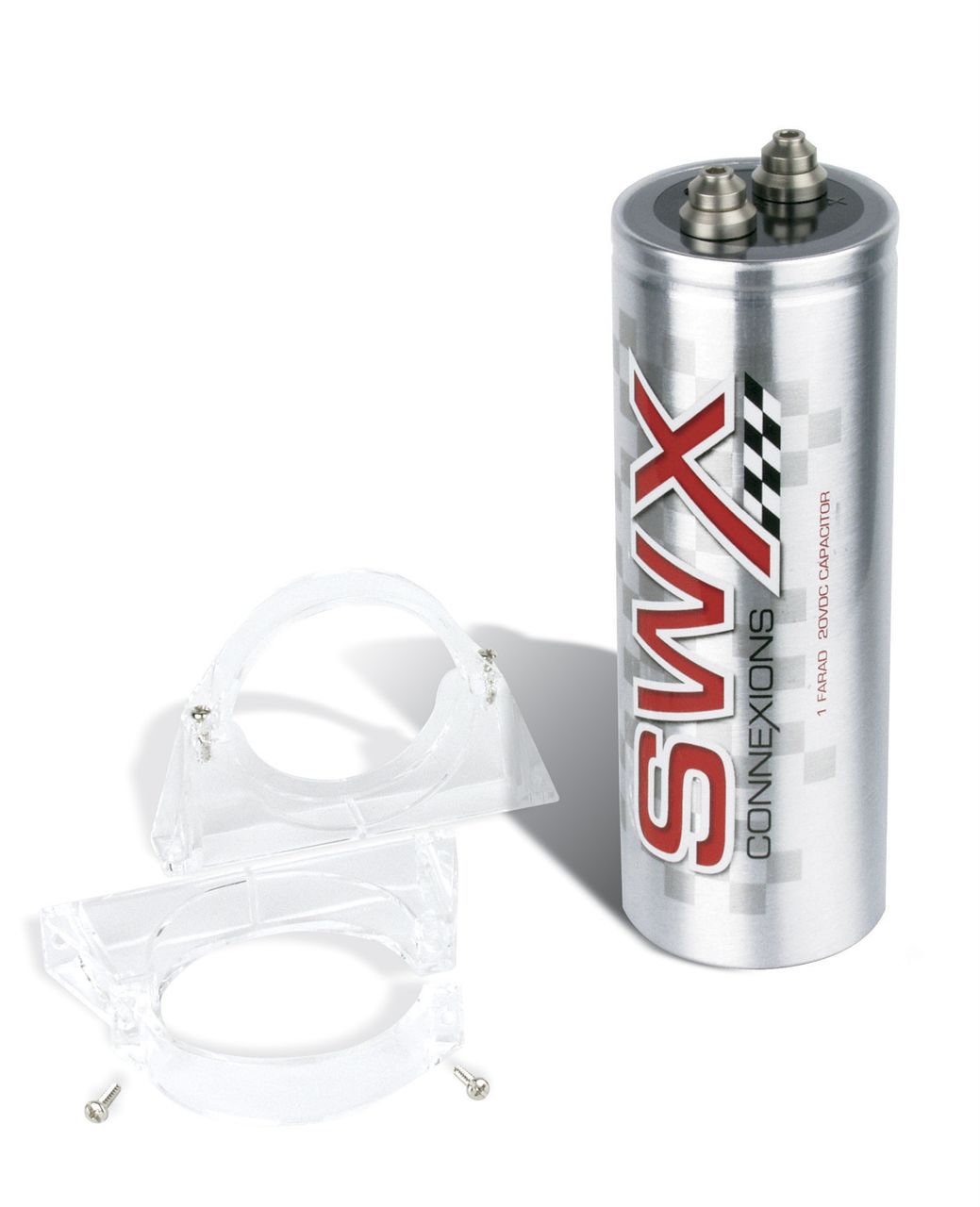
A capacitor stores electricity and acts as a local reservoir of instant power for the amplifier. When the amplifier draws more current than the electrical system can provide at that moment, the capacitor covers the difference up to its stored capacity. The battery is not overloaded, voltage stays stable, and the music maintains its dynamic quality instead of going flat on heavy hits.
What a Capacitor Can and Cannot Do
- Smooth out brief current spikes during loud bass notes
- Reduce distortion caused by sudden voltage drops
- Protect amplifiers from brief under-voltage surges
- Keep voltage stable during short transient peaks
- Make your system louder
- Replace an undersized alternator or battery
- Fix sustained voltage drops lasting more than a second or two
- Supply continuous power to an underpowered electrical system
How to Size a Capacitor
It does not hurt to use more. Many systems run 2 or 3 Farads per 1,000 watts RMS for additional headroom. Capacitors start at 1 Farad and go up from there.
Mount the capacitor as close to the subwoofer amplifier as possible. The shorter the path between the capacitor and the amp, the faster the capacitor can respond to a current demand. Follow the manufacturer's wiring and mounting instructions carefully.
Use Caution When Handling
A fully charged capacitor stores significant energy and can deliver a dangerous shock if mishandled. Always discharge the capacitor before making or breaking any connections. A resistor or light bulb wired across the capacitor's terminals will allow it to discharge slowly and safely. Follow all included instructions before installation.
When a Capacitor Is Not Enough
If voltage drops last more than a second or two, a capacitor will not help — its stored charge is depleted quickly and it cannot sustain output over longer periods. In these cases the underlying electrical system needs attention. Options include upgrading the vehicle's alternator to a higher output unit, adding a secondary battery wired in parallel, or reducing the total amplifier load.