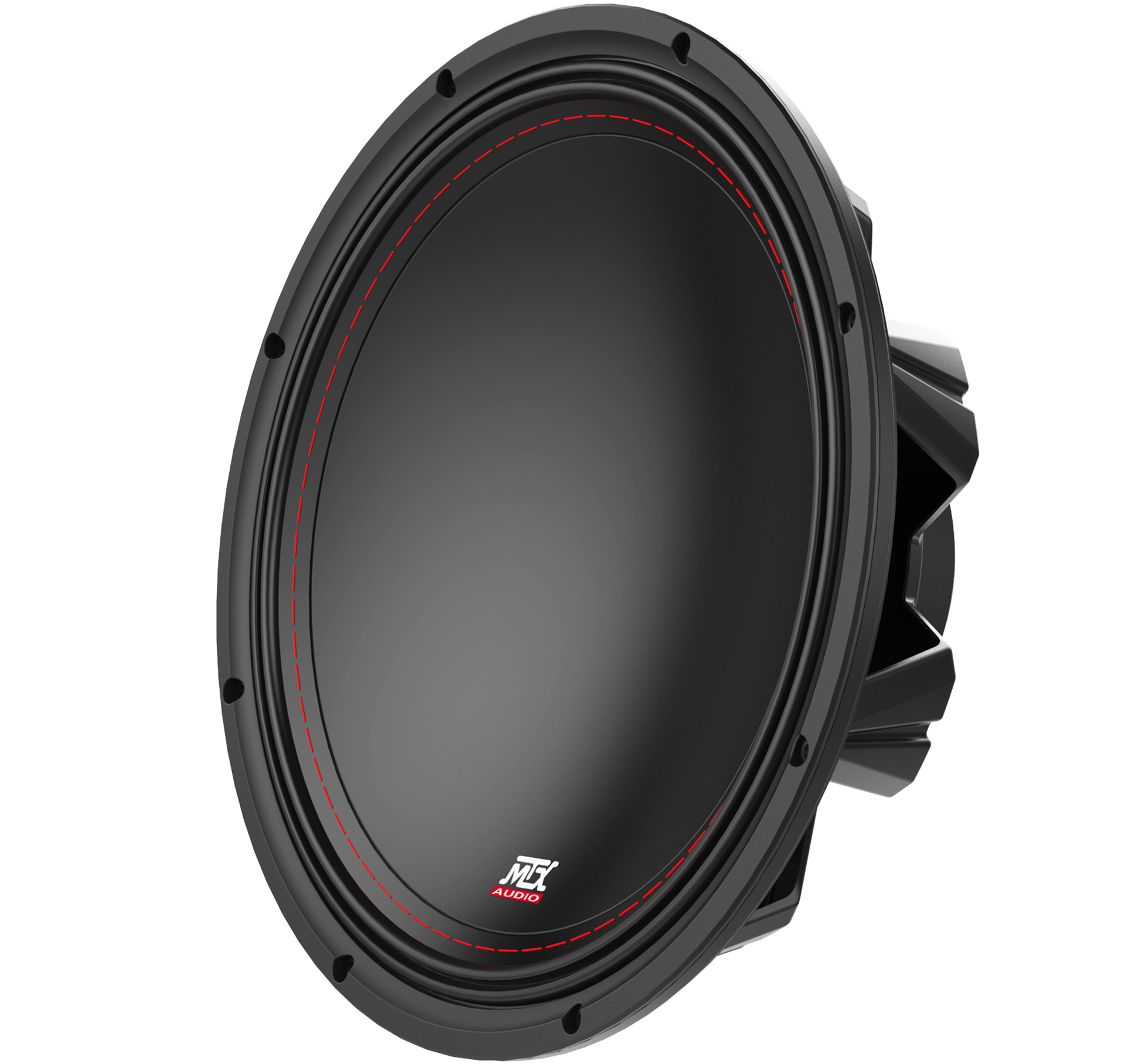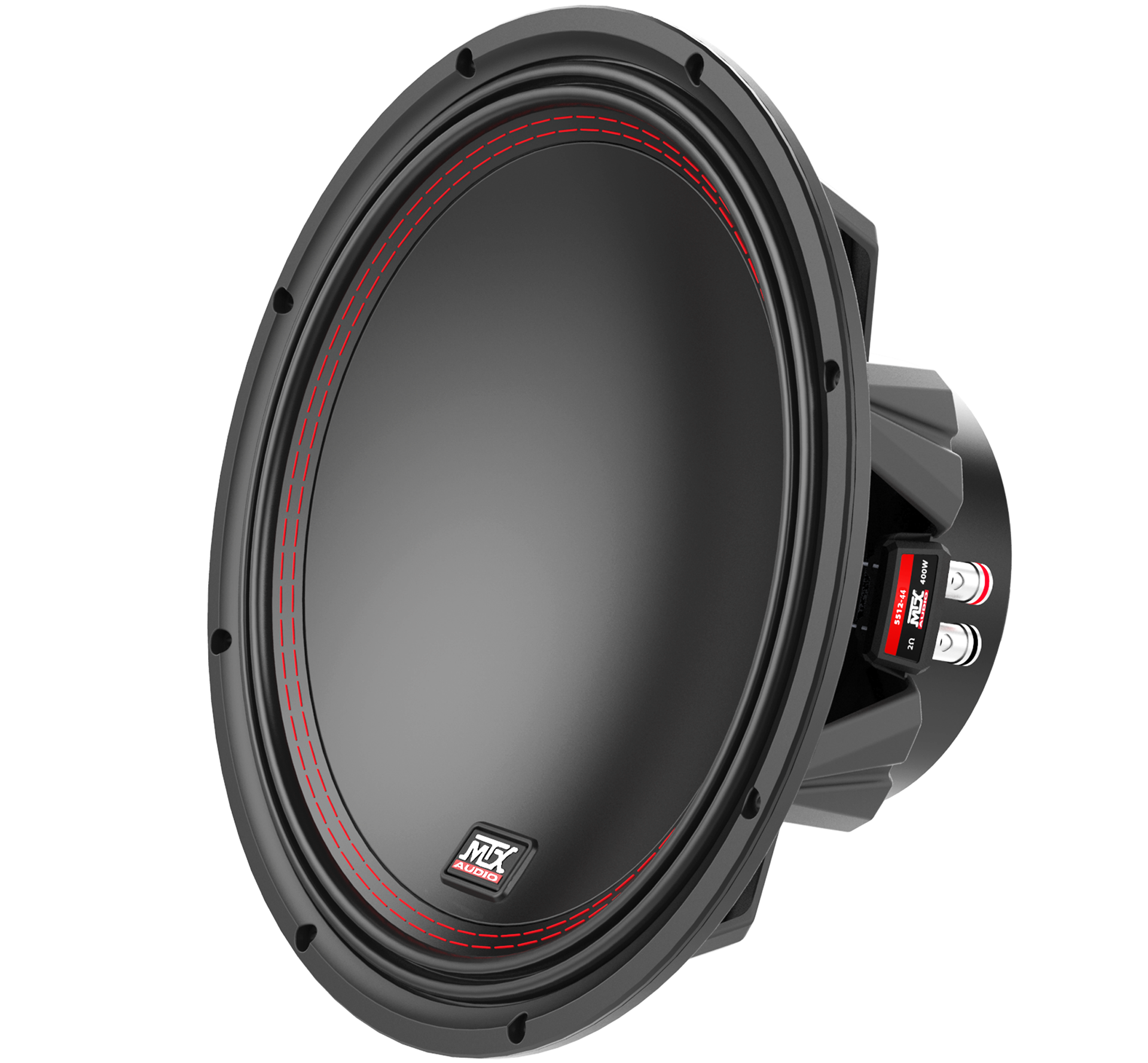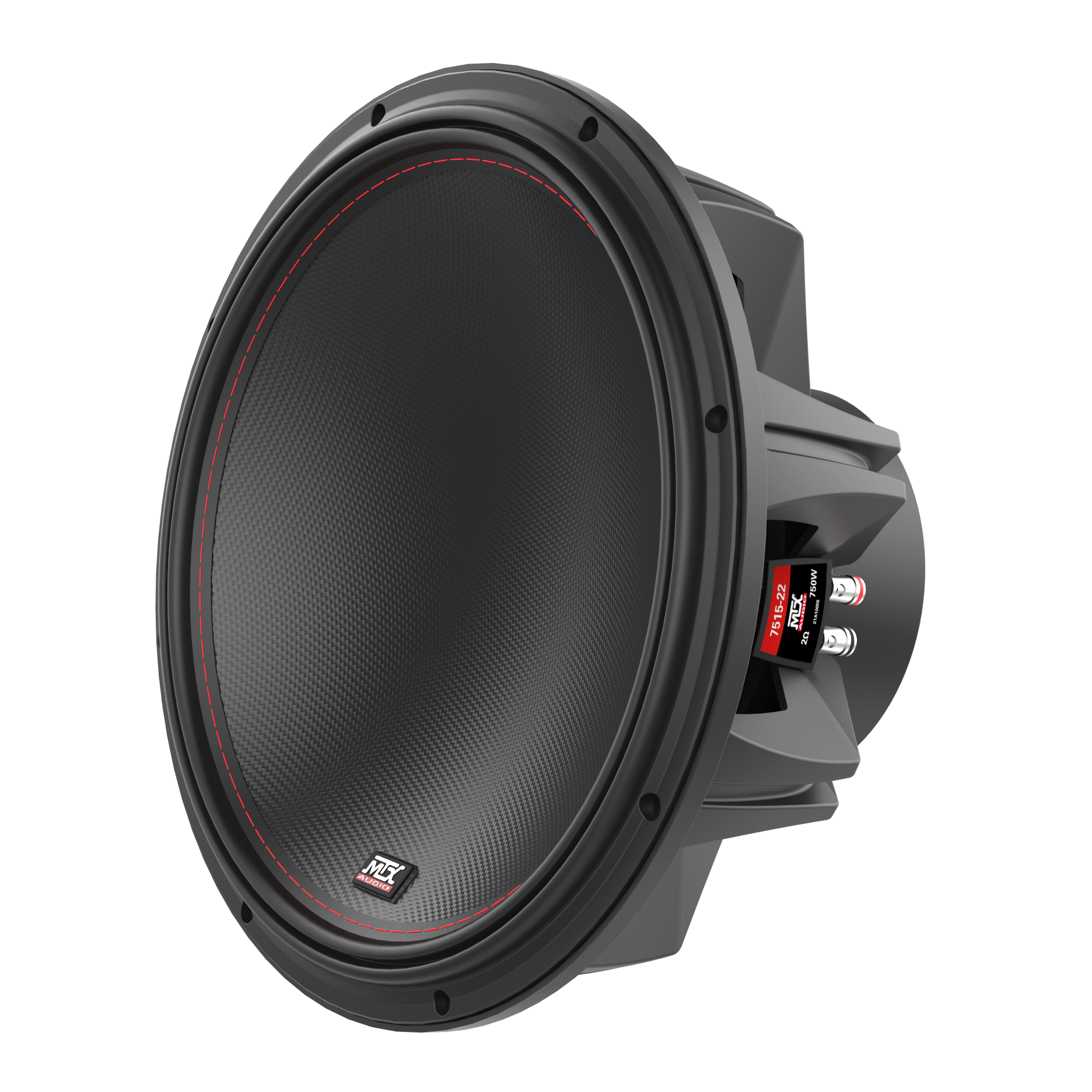

Spider Plateau Venting is characterized by vents surrounding the voice coil between the motor structure and the spider — the hottest area of a subwoofer. Air is directed in and out of this zone allowing the woofer to handle more power while keeping the voice coil cool. This translates to a better-performing subwoofer across the board.
How It Works
MTX subwoofers are designed to handle large amounts of power and produce maximum bass. With Spider Plateau Venting, cool air is drawn through large vents from all angles directly onto the voice coil as the cone moves forward. As the cone moves backward, warm air is pushed out and forced off the voice coil. By aiming a large volume of cool air directly at the voice coil, MTX creates an extremely efficient self-cooling cycle that ensures the woofer can play longer and perform better than subwoofers using traditional venting techniques.
Spider Plateau Venting vs. the Competition
Traditional venting techniques take on several forms, many with unique brand names, but our analysis shows they are all less effective than Spider Plateau Venting at achieving their primary goal of cooling the voice coil.
The most common subwoofer venting system — and one MTX actually used before switching to Spider Plateau Venting. A vented pole piece is hollow, and as the cone moves, air is drawn in and pushed out through the inside of that pole. The problem is the voice coil sits on the outside of the pole piece. Cool air moves through the inside of the mechanical structure, but the voice coil is never directly exposed to it. It is like trying to cool the outside of your car by turning on the air conditioning.
Similar to a vented pole piece with a modification: the hollow pole houses an adapter to which a narrow tube is attached, and a liquid cooling agent such as antifreeze is pumped in and held stagnant to theoretically cool the voice coil. Even assuming the liquid stays cool, this method still only addresses the inside of the pole piece — not the voice coil directly.
A branded name for a vented pole piece. Like any other vented pole piece, cool air travels through the inside of the pole. The voice coil remains on the outside. The voice coil is only cooled indirectly.
Our experience in designing subwoofers has led us to conclude this is one of the least effective ways to cool a voice coil. These systems are often marketed as superior because they use multiple venting methods simultaneously — a side vent alongside a vented pole piece. But two ineffective systems do not add up to one effective one. Cool air is brought in, but once inside, it swirls around getting progressively warmer until the woofer overheats. Think of a smoker in a car: opening one window lets the smoke escape freely. Opening all four just lets it swirl around inside.